Creating a grand patio isn’t just about throwing a few chairs on a deck. It’s about designing an outdoor room that feels like an extension of your home, a place where you actually want to spend time, whether you’re entertaining guests or enjoying your morning coffee. Grand patio furniture sets the tone for this space, blending functionality with style while standing up to the elements. This guide walks you through selecting, arranging, and maintaining high-impact outdoor furniture that transforms your patio from forgotten corner to outdoor oasis.
Table of Contents
ToggleKey Takeaways
- Grand patio furniture transforms outdoor spaces by combining substantial presence, generous cushioning, and sturdy construction that anchors your entire patio design.
- Material selection directly impacts durability and cost—teak hardwood lasts 15+ years, while quality composites offer similar visual impact at 40-60% lower cost.
- Strategic seasonal shopping during end-of-season clearances (September-October and January-February) can save 30-50% on high-quality grand patio furniture investments.
- Prioritize scale over quantity by investing in one statement piece like a generous sectional rather than multiple mismatched chairs to maximize patio impact.
- Regular maintenance including monthly frame cleaning, proper cushion storage, and bi-annual hardware checks preserves your grand patio furniture investment for years to come.
What Makes Grand Patio Furniture Stand Out
Grand patio furniture goes beyond basic deck sets. It’s characterized by substantial presence, generous cushioning, sturdy construction, and thoughtful design that commands attention without screaming for it. These pieces typically feature deeper seating, wider frames, and proportions that feel intentional rather than cramped.
The difference between ordinary patio furniture and grand setups comes down to scale and visual weight. A grand sectional with chaise components and coordinated side tables creates a cohesive outdoor living area that feels planned and inviting. Quality grand patio furniture anchors the space, making the entire patio feel more curated and luxurious.
Look for pieces with solid construction, hardwood frames, reinforced joints, and hardware that won’t corrode. Details matter: piping on cushions, contrasting trim on upholstery, and carefully selected finishes elevate the visual impact. When evaluating grand patio furniture, assess how it makes you feel stepping into the space, not just whether it fits the dimensions.
Choosing the Right Furniture Style for Your Outdoor Space
Your patio’s style should complement your home’s architecture and your lifestyle. A grand patio isn’t about following trends, it’s about creating a timeless outdoor room that reflects how you actually live. Consider your home’s existing design language: does it whisper minimalism, embrace warmth, or lean traditional?
Think about your climate and how you’ll use the space. A grand setup in a sunny, dry Arizona patio differs dramatically from a covered Seattle porch. Your furniture choice should acknowledge this reality. Similarly, if you’re hosting large dinners regularly, a grand dining table with ample seating beats boutique furniture that looks great but seats four. The best grand patio furniture solves your actual problems.
Visit showrooms and sit in pieces. Digital photos lie about comfort and proportion. Bring your phone with a photo of your patio so you can mentally place the furniture in context.
Contemporary and Modern Designs
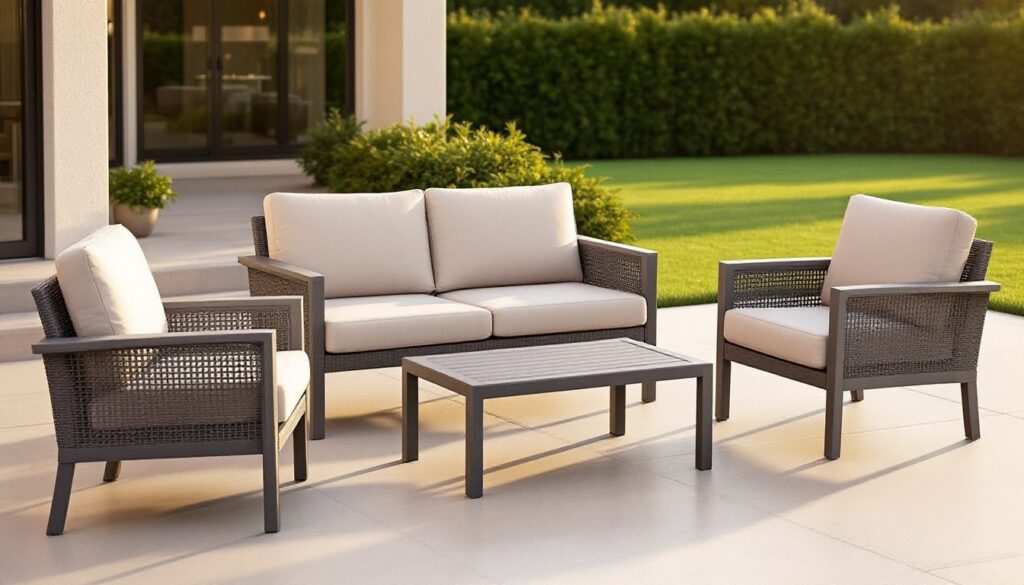
Contemporary grand patio furniture emphasizes clean lines, minimalist forms, and often features metal frames with performance upholstery. Think low-profile sectionals in neutral tones, sleek dining tables with geometric bases, and accent pieces in matte black or brushed aluminum.
Modern setups work especially well on minimalist patios or those adjacent to contemporary homes. They’re relatively low-maintenance and photograph beautifully. The simplicity means you’re paying for quality construction rather than ornamental detail. Look for fade-resistant fabrics and moisture-resistant wood species like teak or composite decking-grade materials.
Communities emphasizing indoor-outdoor flow, as showcased in design-focused publications about California living, often favor contemporary grand furniture that extends the minimalist aesthetic outside.
Traditional and Classic Options
Traditional grand patio furniture embraces comfort and timeless silhouettes: deep leather Chesterfield sectionals, wicker conversation sets, wrought-iron dining ensembles, and cushioned lounge chairs with curved arms. These pieces draw from established design vocabularies and typically age gracefully.
Classic options often require more maintenance, think regular cushion fluffing, fabric conditioning, and seasonal storage. But they excel at creating patios that feel like established outdoor rooms rather than temporary installations. Wicker needs proper coverage and occasional cleaning. Wrought iron benefits from touch-up paint to prevent rust in humid climates.
Traditional grand patio furniture shines in homes emphasizing character and established comfort. Southern home design aesthetics frequently leverage classic outdoor furniture as a cornerstone of entertaining spaces. Your patio becomes a natural gathering place because the furniture literally welcomes people to stay and enjoy themselves.
Durability and Material Considerations
Material choice makes or breaks a grand patio investment. Outdoor furniture endures extreme temperature swings, UV exposure, moisture, and salt spray (if coastal). Understanding material trade-offs prevents disappointing purchases.
Hardwood options like teak naturally resist rot and weather beautifully over time, developing a silver-gray patina. Cumaru and ipe are denser alternatives that hold color longer but require more aggressive maintenance. Hardwoods command premium prices but last 15+ years with minimal care.
Aluminum frames offer lightweight durability without rust concerns. They’re powder-coated for color options and pair well with sling or cushioned seating. Aluminum won’t rot or splinter but can feel less substantial than wood. High-quality aluminum pieces still deliver longevity and age well.
Wrought iron and steel create dramatic visual impact but demand rust prevention. Expect regular touch-up painting in humid climates. Skip wrought iron entirely in coastal areas unless you commit to meticulous maintenance.
Wicker and rattan require sheltered conditions or seasonal storage. Synthetic wicker (resin-wrapped PE) resists weather better than natural fibers. Real wicker offers warmth but needs covered patios and careful moisture management.
Cushioning and fabrics deserve equal attention. Performance fabrics designed for outdoor use (Sunbrella, Dralon) resist fading and mildew better than standard upholstery. Check water shedding and colorfastness ratings. Cushion cores should use quick-dry foam that resists moisture retention and mildew growth.
Price correlates strongly with durability. A $1,200 sectional might need replacement in 5 years: a $4,500 teak equivalent could last 20+. Calculate cost-per-year to make informed comparisons. Weather-resistant outdoor furniture specifically designed for longevity offers proven durability through proper material selection and construction standards.
Budget-Friendly Ways to Create a Grand Patio Setup
A grand patio doesn’t require unlimited spending. Strategic choices let you build impressive outdoor spaces within reasonable budgets.
Shop sales strategically. End-of-season clearances (September-October for summer stock, January-February for spring inventory) offer 30-50% discounts. Seasonal furniture sales at major retailers provide access to quality pieces at fraction prices. Plan purchases around these windows if timeline allows.
Mix quality tiers. Invest heavily in pieces you use most, your lounge chair or dining table. Budget-conscious choices work fine for accent seating or side tables. A $2,000 teak dining table surrounded by $300-per-seat aluminum-frame lounge chairs still delivers impact while controlling costs.
Prioritize scale over quantity. One generous sectional with proper proportions impacts a patio more than five mismatched chairs. A single statement piece, large dining table, oversized pergola with cushioned seating, anchors the space affordably.
Build modular solutions. Sectional components let you start with essentials (sofa and coffee table, ~$2,000-3,000) then add ottomans, chaises, and tables over time as budget allows. This spreads costs and lets you live with pieces before expanding.
Consider composite alternatives. Modern composites mimic wood’s appearance while eliminating maintenance hassles. Quality composite furniture runs 40-60% of premium hardwood pricing but delivers similar visual weight and durability.
DIY finishing touches. Outdoor rugs, string lighting, and planters with strategic landscaping amplify perceived grandeur without heavy furniture spending. A $300 area rug anchors a gathering space and costs far less than additional seating.
Maintenance Tips to Keep Your Patio Furniture Looking New
New furniture looks grand for about five minutes, then reality hits. Proper maintenance preserves that investment and keeps your patio inviting.
Seasonal preparation matters. Before winter storage or seasonal weather changes, clean cushions thoroughly and ensure fabric is completely dry before covering. Damp cushions mildew in storage. Uncover periodically during mild weeks to prevent moisture accumulation.
Regular cleaning prevents buildup. Wipe down frames monthly with mild soap and water. For cushions, vacuum crumbs and debris, spot-clean stains promptly (don’t let them set), and hose down slings or upholstery gently if weather permits.
Protect from direct sun when possible. Umbrellas, pergolas, or shade sails extend cushion and fabric lifespan by reducing UV exposure and fading. This investment pays dividends over time.
Treat wood appropriately. Hardwoods benefit from annual oil conditioning to maintain color and weather resistance. Teak actually requires less maintenance than lighter woods, the silvering is natural oxidation, not damage. Painted wood needs touch-ups as weathering inevitably occurs.
Check fasteners and hardware twice yearly. Bolts loosen, hinges corrode, and welds stress under wind and use. Tighten fasteners before rust settles in. Replace corroded hardware rather than working around it.
Store off-season correctly. Cushions belong indoors or in weatherproof storage, never under tarps where moisture traps. Furniture itself can often stay outside year-round if materials allow, but confirm manufacturer guidance for your climate. Garden design resources emphasizing outdoor living maintenance provide season-specific care calendars worth consulting.
Replace smaller components strategically. Cushions wear faster than frames. Plan for occasional cushion replacement, it’s far cheaper than replacing the entire set. Removable covers simplify washing and extend cushion life significantly.