Mid-century modern design has remained one of the most sought-after interior styles for decades, and for good reason. Its clean lines, functional elegance, and timeless appeal make it a practical choice for any bedroom. Whether you’re furnishing a new space or refreshing an existing one, mid-century bedroom furniture offers a balance between aesthetic charm and everyday usability. Unlike trendy décor that fades quickly, these pieces are built to last and adapt well to different design directions. This guide walks you through what to look for, where to find quality pieces, and how to blend them into your home without a complete overhaul.
Table of Contents
ToggleKey Takeaways
- Mid-century bedroom furniture combines clean lines and functional elegance with timeless design that adapts to various décor styles without needing a complete bedroom overhaul.
- Essential mid-century pieces like low-profile bed frames with tapered legs, proportionally scaled nightstands, and balanced dressers prioritize human comfort and make spaces feel more open and easier to maintain.
- Quality materials matter: prioritize solid wood like walnut or teak with minimal, understated hardware, and avoid particleboard, ornate details, and high-gloss finishes that contradict the mid-century aesthetic.
- You can introduce mid-century bedroom furniture gradually by starting with one anchor piece (bed or dresser) and coordinating textiles, lighting, and wall art to reinforce the style without replacing all existing furniture.
- Authentic vintage mid-century pieces cost $2,000–$5,000+, while quality reproductions range from $800–$1,500, and mixing one genuine vintage item with new reproductions offers a balanced approach to achieving this timeless look.
What Defines Mid-Century Modern Bedroom Design
Mid-century modern spans roughly the 1930s through 1960s, though the style continues to influence contemporary furniture today. The hallmark is simplicity paired with sophistication, no ornate trim, no heavy carved details, just intentional form and function working together.
Look for tapered legs (often angled slightly outward), minimalist hardware, and materials like walnut, teak, and rosewood paired with upholstery in solid colors or subtle geometric patterns. The color palette typically features warm neutrals with occasional bold accent colors like mustard, teal, or burnt orange. Curves appear, but they’re restrained and purposeful, not decorative flourishes.
What makes mid-century design practical for bedrooms is its refusal to waste space. Furniture tends to sit slightly off the floor on those signature legs, which visually lightens a room and makes cleaning easier. Proportions are human-scaled, nightstands are a reasonable height, dressers don’t tower awkwardly, and beds feel grounded without dominating the space. This is design born from post-war efficiency: every element serves a purpose, and that restraint is what keeps the style fresh.
Essential Mid-Century Bedroom Furniture Pieces
Beds, Nightstands, and Dressers
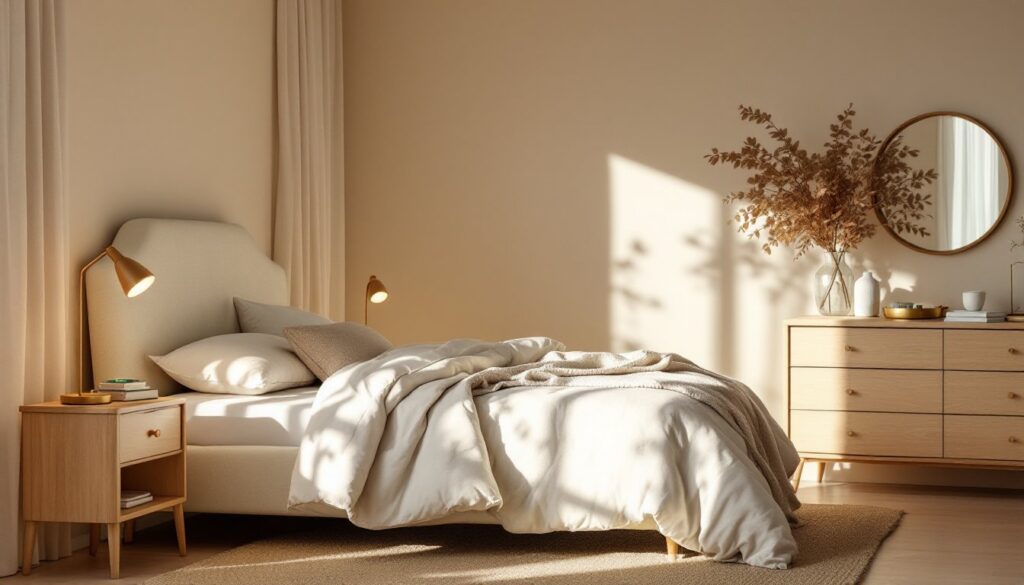
Start with the bed frame. A mid-century bed typically features a low-profile platform or slatted base with tapered legs, usually 4 to 6 inches off the ground. Look for solid wood construction (walnut, oak, or teak) with clean, unadorned headboards. The headboard can be simple and upholstered, a sculptural wood panel, or even just the frame itself. Avoid heavy, ornate designs: the goal is a visual anchor that doesn’t overwhelm the room.
Nightstands should match or complement the bed’s material and leg style. A typical mid-century nightstand is a small rectangular table, roughly 20 to 24 inches wide and 18 inches deep, with one or two drawers and open shelving below. The proportions matter: too large, and they clutter the space: too small, and they don’t function well for a lamp and phone. Pair them with a simple swing-arm wall sconce or a modest table lamp to keep the visual weight down.
Dressers are where storage meets presence. A mid-century dresser typically runs 48 to 60 inches wide with a moderate depth (16 to 18 inches), featuring four to six drawers stacked in a balanced proportion. The most recognizable style has a narrow top drawer and progressively wider drawers below. Hardware is minimal, often recessed pulls or simple bar handles. A matching mirror is common, but it should be a simple frame, not ornate.
Consider adding a credenza or low cabinet for additional storage without visual bulk. These pieces sit lower and stretch horizontally, which makes a room feel wider and less cluttered.
Key Design Elements and Materials to Look For
Solid wood is the gold standard for mid-century pieces, but quality varies widely. Walnut and teak are prized for their grain and durability: oak and ash are softer and more affordable but still sturdy. Plywood veneers are acceptable if the construction is solid, look for consistent grain and no visible separation at seams. Avoid particleboard unless the piece is clearly a modern reproduction meant for budget shopping.
Hardware (drawer pulls, hinges, handles) should be functional and understated. Brass, chrome, or simple wood pulls are authentic. Ornate, crystal, or heavily decorated hardware breaks the mid-century aesthetic immediately.
Upholstery fabrics matter for beds, headboards, and seating. Wool, linen, and cotton blends in solid colors or simple geometric patterns stay true to the period. Leather, suede, and velvet add luxury without straying far from the style. Avoid busy florals, florals, or high-pattern fabrics that feel more contemporary or traditional.
Finishes should be matte or satin: high-gloss varnish feels dated and artificial. A natural or warm stain on wood is ideal. Matte black or white paint works for some pieces, particularly side tables and cabinets.
Dimensions are crucial. Mid-century furniture is proportioned for human comfort and typical room sizes of the 1950s-60s. A dresser wider than 60 inches or deeper than 20 inches will feel oversized in many modern bedrooms. Check measurements carefully before purchasing, especially when buying online.
How to Mix Mid-Century Furniture With Your Existing Decor
You don’t need to overhaul your entire bedroom to introduce mid-century pieces. Start with a single anchor item, typically the bed frame or dresser, and build around it. If your walls are contemporary neutral (soft gray, warm beige, off-white), mid-century furniture sits comfortably without competing.
Color coordination is flexible as long as you’re intentional. A walnut bed pairs well with other warm wood tones: a lighter oak piece works alongside white or light gray walls. Avoid mixing wood tones randomly, choose two primary woods (walnut and oak, for instance) and stick with them. If you have existing bedroom furniture that’s not mid-century, keep it minimal and neutral. A modern nightstand in white or black won’t clash with a walnut dresser if both pieces are simple.
Textiles are where you can add warmth and personality without disrupting the style. A geometric throw blanket, a wool bedspread in a solid warm tone, or patterned throw pillows in mustard, teal, or charcoal anchor the mid-century vibe. Curtains should be simple, linen, cotton, or light wool in a solid or subtle pattern. Avoid heavy damask or ornate florals.
Lighting ties everything together. A sputnik chandelier, arc floor lamp, or Danish-inspired table lamp reinforces mid-century character. Avoid crystal chandeliers or overly modern minimalist fixtures. Wall art should lean toward abstract, geometric, or period photography rather than florals or farmhouse prints. The design philosophy is clarity and purpose, so every element should feel intentional.
Where to Buy and Budget Tips
Mid-century furniture ranges from vintage originals to modern reproductions, and pricing reflects that spectrum dramatically. An authentic 1960s walnut dresser by a known designer can run $2,000 to $5,000 or more. A contemporary reproduction in similar materials costs $800 to $1,500. Budget-friendly versions (often particleboard with veneer) start around $400 but won’t last decades.
Antique shops and estate sales offer authentic pieces, but inspect carefully for structural issues, woodworm, or water damage. The advantage is uniqueness and often solid construction: the risk is shipping costs and limited recourse if something arrives damaged. Online platforms like Facebook Marketplace and Craigslist yield local finds you can inspect before buying.
Online retailers specializing in mid-century or modern furniture (and some mainstream home furniture sites) offer quality reproductions with return policies. Read reviews closely and confirm material specifications, “wood grain” veneers aren’t the same as solid wood. Furniture from established makers tends to cost more but holds value and durability.
For budget-conscious shoppers, furniture showrooms and outlets sometimes have discontinued mid-century styles at reduced prices. Mixing one authentic vintage piece with quality reproductions balances cost and authenticity. A vintage walnut dresser paired with a new reproduction bed frame and nightstands creates a cohesive, lived-in look without the full investment.
Research on design-focused sites like Dwell and Elle Decor can help you understand authentic details and recognize quality reproductions. Houzz offers style galleries where you can save combinations and see how pieces work in real bedrooms. Use these resources to refine your eye before spending.
Conclusion
Mid-century bedroom furniture works because it respects both function and beauty, a philosophy that never goes out of style. Whether you invest in vintage originals or choose quality reproductions, the key is selecting pieces with solid construction, clean proportions, and materials that age well. Start small, choose an anchor piece, and build intentionally. Your bedroom will feel calmer, more functional, and genuinely timeless.