A sparkling pool is the crown jewel of any backyard oasis, but maintaining it can feel like a full-time job. Between skimming leaves and balancing chemicals, it’s easy to wonder if you’ve accidentally signed up for a career in underwater chemistry. Fear not! With the right tips and tricks, pool maintenance can become less of a chore and more of a splash-tastic adventure.
Imagine diving into crystal-clear water instead of a murky swamp. A well-maintained pool not only looks inviting but also ensures safety for friends and family. So grab your floaties and let’s dive into the essential steps that’ll keep your pool in tip-top shape. After all, who wouldn’t want to be the proud owner of the neighborhood’s most pristine swimming spot?
Importance Of Swimming Pool Maintenance
Regular maintenance enhances a pool’s aesthetic appeal and ensures safety for swimmers. Clean water not only looks inviting but also encourages frequent use, making a well-maintained pool a gathering spot for friends and family. Proper upkeep prevents algae build-up and clear water helps avoid potential health hazards associated with contaminated pools.
Safety remains a top priority. Ensuring that chemical levels are balanced reduces risks of skin irritations and waterborne illnesses. Regular checks on pool equipment can prevent accidents related to malfunctioning devices. Routine maintenance tasks, such as checking pool fencing and ensuring proper drainage, also contribute to keeping swimmers safe.
Longevity of pool infrastructure remains another critical aspect. Proper maintenance protects the pool’s surface and equipment from wear and tear, ultimately resulting in lower repair costs. When treated with care, pool systems function efficiently, extending their lifespan and saving on costly replacements. Tracking and documenting maintenance routines can uncover recurring issues before they escalate.
Investment in a swimming pool creates a need for preservation. Homeowners can enjoy their investment more fully by committing to ongoing maintenance. Adopting a consistent schedule fosters a refreshing atmosphere, allowing users to appreciate their outdoor space year-round.
Efficient maintenance routines also save water and energy. By maintaining filtration systems and ensuring that water circulation operates smoothly, owners can reduce waste and lower utility bills. Sustainable practices, such as using eco-friendly cleaning products, further contribute to environmental responsibility.
Essential Tools For Swimming Pool Maintenance
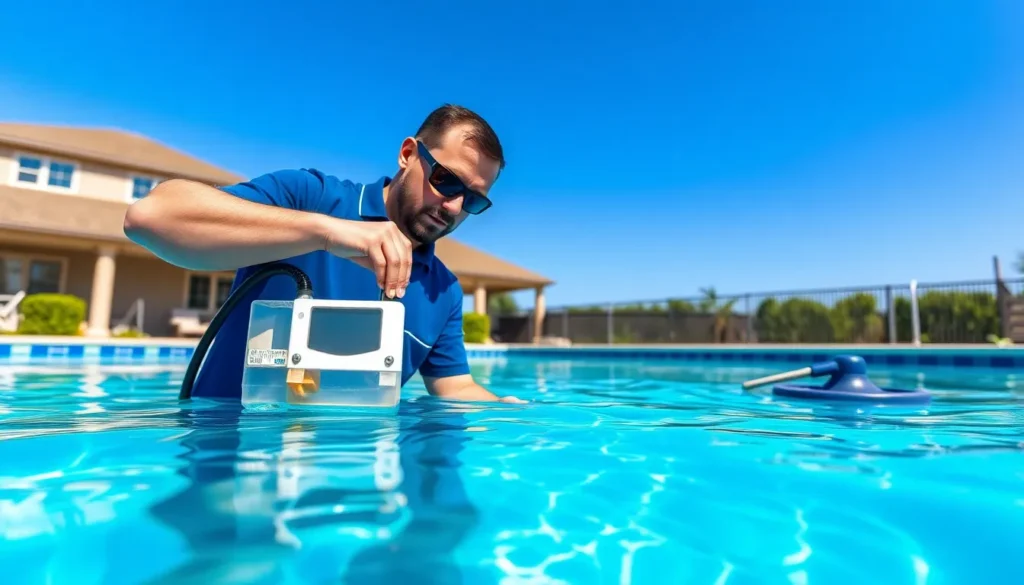
Maintaining a swimming pool requires specific tools that simplify tasks and improve overall efficiency. Having the right equipment on hand makes the process more manageable and helps ensure a safe swimming environment.
Water Testing Kits
Water testing kits play a crucial role in pool maintenance. These kits measure chlorine, pH levels, alkalinity, and stabilizer concentrations. Accurate readings prevent issues like algae growth and skin irritations. Many kits simplify testing with test strips or liquid reagents, providing quick results. Regular testing, ideally at least once a week, keeps the water balanced and safe for swimmers. Pool owners can often find kits at local retailers or online. Investing in a reliable water testing kit promotes ongoing health and cleanliness for the pool.
Cleaning Equipment
Cleaning equipment includes tools essential for keeping the pool pristine. Skimmers remove debris from the surface, capturing leaves and insects before they sink. A pool vacuum tackles dirt settled on the bottom, ensuring thorough cleaning. Brushes for walls and tiles help prevent algae buildup. Using a leaf rake addresses larger debris during autumn months. The effectiveness of these tools vastly improves overall pool hygiene. Regular cleaning contributes to a longer lifespan for pool surfaces and equipment. Homeowners can easily find a variety of cleaning supplies to match their specific pool needs.
Regular Maintenance Tasks
Regular maintenance tasks play a crucial role in keeping a swimming pool clean and inviting. He or she can ensure the pool remains safe and enjoyable with specific activities.
Skimming and Vacuuming
Skimming involves removing debris from the pool surface. This task should occur daily to keep the water clear. Vacuuming the pool floor ensures the removal of dirt and algae. Many homeowners find it beneficial to vacuum at least once a week for optimal cleanliness. Investing in a manual or automatic vacuum can simplify the process. A clean pool enhances the overall appearance and improves swimmer safety.
Balancing Chemicals
Balancing chemicals is essential for maintaining water quality. Homeowners ought to test the water at least once a week. Testing kits measure chlorine levels, pH, alkalinity, and stabilizer concentrations. Accurate readings prevent issues like algae growth and irritation to swimmers’ skin. Adjustments to chemical levels may be necessary following heavy use or after rain. Maintaining balanced water helps protect pool surfaces and ensures a healthy swimming environment.
Filter Maintenance
Filter maintenance ensures the pool operates efficiently. Checking and cleaning the filter regularly aids in effective debris removal. Cartridge filters require cleaning every 4 to 6 weeks, while sand filters may need backwashing every month. Neglecting filter maintenance can lead to reduced water clarity and increased energy costs. Regular inspection of the filtration system helps identify wear and avoid costly repairs. A well-maintained filter promotes a cleaner pool and enhances swimmer comfort.
Seasonal Maintenance Tips
Seasonal maintenance optimizes pool performance and ensures enjoyable swimming experiences year-round. Homeowners must follow specific procedures in winter and spring to protect their investment.
Winterization Steps
Winterization involves several crucial steps to prevent damage during colder months. First, clean the pool thoroughly, removing debris and vacuuming the bottom. Next, balance chemical levels, ensuring appropriate pH and alkalinity before closing the pool. It’s essential to lower the water level, allowing for proper snow and ice expansion. Installing a winter cover protects the pool from falling debris and minimizes evaporation. Disconnecting and draining all equipment, including pumps and filters, prevents freezing damage. Lastly, store all accessories safely to enhance longevity.
Spring Start-Up Procedures
Starting the pool in spring requires careful attention to detail. Initially, remove the winter cover and inspect it for damages; clean and store it properly. Add water to reach the appropriate level, ideally between the mid-skimmer and tile line. Testing the water for chemical balance becomes essential, particularly focusing on pH, chlorine, and alkalinity levels. Once balanced, shock the pool to eliminate contaminants and activate sanitation levels. Cleaning the filter and reassembling equipment prepares the pool for regular use. Lastly, ensure all safety measures are checked and functioning, providing a safe swimming environment.
Troubleshooting Common Issues
Homeowners may encounter several common pool maintenance issues. Recognizing and addressing them promptly helps ensure a clean and inviting swimming environment.
Algae Growth
Algae growth can disrupt your pool’s clarity and safety. If water temperatures rise or chemical levels fall, algae can flourish quickly. Regularly test chlorine levels and maintain a pH between 7.2 and 7.8 to prevent this problem. It’s essential to shock the pool with chlorine if algae appears. Brushing the walls and floor assists in dislodging algae, making it easier to vacuum. Finally, keeping water circulation consistent helps inhibit algae reproduction, promoting a fresher pool experience.
Cloudy Water
Cloudy water often signifies an imbalance in chemical levels, inadequate filtration, or contaminants. When filtration systems underperform, particles remain suspended, leading to murky water. Before addressing the problem, check the filter’s efficiency and cleaning schedule. Testing pH and alkalinity helps ensure water chemistry is within recommended levels. If necessary, use a clarifier to assist in clumping particles together for easier filtration. Regular maintenance of the filtration system and adequate water circulation mitigates cloudy issues, allowing swimmers to enjoy crystal-clear water.
Maintaining a swimming pool doesn’t have to feel overwhelming. With the right tools and a consistent routine, homeowners can enjoy a clean and safe swimming environment. Regular maintenance not only enhances the pool’s appearance but also ensures the health and safety of all users.
By prioritizing water quality and equipment checks, it’s possible to prevent common issues and extend the lifespan of the pool. Embracing seasonal maintenance practices further optimizes performance, allowing for year-round enjoyment.
Ultimately, investing time and effort into pool upkeep pays off, creating a refreshing oasis that brings joy and relaxation to family and friends.