Owning an inground pool is like having a personal oasis right in your backyard. But let’s face it—keeping that sparkling blue paradise in tip-top shape can feel like a full-time job. From pesky leaves to mysterious algae, the challenges of pool maintenance can turn a refreshing dip into a dreaded chore. But fear not! With the right tips and tricks, maintaining your pool can be as enjoyable as lounging on a floatie with a cold drink in hand.
Understanding Inground Pool Maintenance
Inground pool maintenance involves consistent care to ensure optimal operation and cleanliness. Maintaining a pool may seem daunting, but with the right approach, it becomes manageable and rewarding.
Importance of Regular Maintenance
Regular maintenance is essential for the longevity of the pool and its equipment. Skimming debris prevents buildup that leads to algae growth and water imbalance. Keeping the water clean protects the pool lining and filtration system. Checking chemical levels frequently helps maintain water quality, ensuring a safe swimming environment. Spotting potential issues early avoids costly repairs. Ignoring maintenance can lead to significant damage, increasing expenses and reducing enjoyment.
Benefits of Proper Pool Care
Proper pool care provides several advantages for pool owners. First, clear water contributes to a more enjoyable swimming experience. Second, maintaining the pool’s appearance enhances its overall value. Third, consistent care can extend the life of pool equipment and surfaces. Regular upkeep reinforces safety by reducing the risk of accidents from debris and chemical imbalances. Additionally, well-maintained pools often use fewer resources, leading to cost savings in the long run. Establishing a routine ensures an inviting oasis for relaxation and fun.
Essential Tools for Maintenance
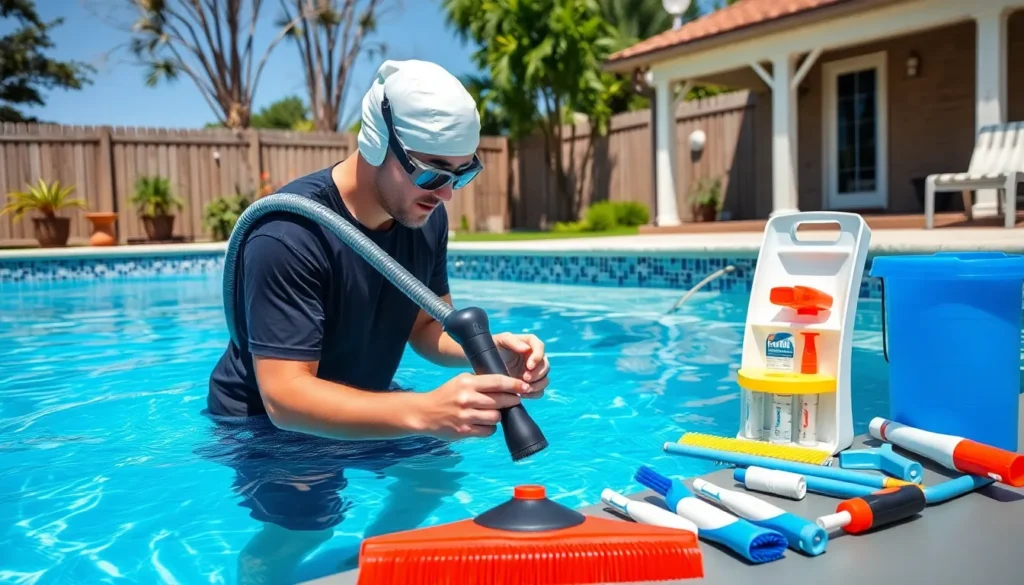
Effective inground pool maintenance relies on using the right tools to ensure cleanliness and safety. Familiarizing oneself with essential equipment simplifies the process and promotes a healthier swimming environment.
Cleaning Equipment
Cleaning equipment plays a critical role in pool upkeep. Skimmers, for example, help eliminate debris such as leaves, insects, and dirt from the water’s surface. Vacuum heads, either manual or automatic, effectively clean the pool floor, removing dirt and algae buildup. Brushes are necessary for scrubbing the walls and tiles, preventing stains and scaling. Additionally, leaf nets streamline the process of gathering larger debris, making pool cleaning quicker and more efficient. Investing in high-quality cleaning tools can significantly reduce the time spent on maintenance, keeping the pool inviting.
Testing Kits
Testing kits are indispensable for monitoring water quality in inground pools. They allow users to measure vital chemical levels, including pH, chlorine, and alkalinity. Beginning with test strips offers a quick and straightforward method for initial assessments. Compatibility with various types of pools enhances their usability. Liquid test kits provide more precise measurements, ensuring water remains balanced. Regularly testing water chemistry helps prevent imbalances that can lead to algae growth and skin irritation. Using a testing kit consistently contributes to a safe and enjoyable swimming experience.
Step-by-Step Maintenance Guide
Maintaining an inground pool requires diligence and consistency. Following a structured routine helps keep the pool clean and safe.
Daily Maintenance Tasks
Check the pool’s water level and ensure it stays within the recommended range. Skimming the surface to remove leaves and debris prevents algae growth. Testing the water’s chemical balance each day keeps it safe for swimming. Use a clean towel to dry off surfaces, reducing contaminants. Observing water clarity provides insight into the pool’s overall health.
Weekly Maintenance Tasks
Brush the walls and floor each week to reduce dirt and algae accumulation. Vacuuming removes any debris that settles on the bottom. Test and adjust pH and chlorine levels to maintain water quality. Empty skimmer and pump baskets to ensure proper circulation. Change the filter as needed for optimal performance.
Monthly Maintenance Tasks
Inspect pool equipment for wear and tear to prevent breakdowns. Shock the pool monthly to eliminate contaminants. Clean the tiles and remove calcium buildup to enhance the pool’s appearance. Evaluate the water’s alkalinity and calcium hardness for balance. Document maintenance tasks to track the pool’s health over time.
Common Issues and Solutions
Inground pools often face several common issues. Understanding these challenges and their solutions ensures an enjoyable swimming experience.
Algae Growth
Algae growth poses a significant problem for pool owners. It thrives in warm, stagnant water and can quickly turn a pool green. Regularly checking chemical levels helps maintain proper balance, which discourages algae growth. Using algaecides as a preventive measure can also help reduce the chances of infestation. It’s crucial to brush the pool walls and floor frequently to remove any early signs of algae before they proliferate. Vacuuming the pool should occur alongside brushing to ensure complete removal of algae particles. A clean and balanced pool environment not only enhances aesthetics but also promotes swimmer safety.
Water Clarity Problems
Water clarity issues can arise due to various factors, including poor filtration or imbalanced chemicals. Cloudy water may indicate the presence of contaminants or inadequate circulation. Ensuring proper filtration involves running the pump for several hours each day, especially in warmer months. Regularly cleaning the filter prevents debris build-up and supports optimal functioning. Testing water chemistry weekly aids in identifying pH and chlorine issues that contribute to clarity problems. In cases of severe cloudiness, shock treatments may be necessary to restore clarity and eliminate impurities. Clear water not only looks inviting but also signals a healthy swimming environment.
Seasonal Pool Maintenance Tips
Seasonal maintenance plays a crucial role in the longevity and cleanliness of an inground pool. Each season presents unique tasks necessary to ensure optimal performance.
Preparing for Winter
Preparing a pool for winter involves several key steps. First, clean the pool thoroughly by removing all debris and brushing the walls. Next, lower the water level below the skimmer to prevent freezing and ensure proper water circulation. Add winterizing chemicals, including algaecide and chlorine, to prevent algae growth. Additionally, cover the pool with a durable winter cover to keep out leaves and debris. Winterizing equipment, like pumps and filters, involves draining and storing them in a safe location. Following these steps ensures the pool remains in excellent condition throughout winter months.
Opening Your Pool in Spring
Spring pool opening requires careful attention to detail. Begin by removing the winter cover and cleaning it before storage. Next, refill the pool to the appropriate level and turn on the equipment to circulate the water. Test the water chemistry, adjusting pH and chlorine levels as necessary to ensure safe swimming conditions. Brushing the walls and vacuuming the floor helps remove any debris built up over winter. Finally, run the filtration system regularly to achieve clear water. Completing these tasks allows for a smooth transition into the swimming season.
Owning an inground pool offers a refreshing escape but maintaining it requires dedication and attention. By following a consistent maintenance routine and utilizing the right tools, pool owners can keep their oasis clean and inviting. Regularly testing water chemistry and addressing issues promptly not only enhances the swimming experience but also prolongs the life of the pool and its equipment.
Seasonal preparations are equally important for ensuring a smooth transition between winter and summer months. With diligence and care, maintaining an inground pool can transform from a daunting task into an enjoyable part of pool ownership, allowing for countless hours of relaxation and fun.