Mid century modern furniture has experienced a remarkable resurgence in recent years, and for good reason. Characterized by clean lines, organic forms, and a commitment to functionality, this design movement, which flourished from the 1940s through the 1960s, remains deeply relevant for today’s homeowners. Whether you’re starting from scratch or refreshing an existing living room, understanding the core principles of mid century modern design and knowing which key pieces anchor the aesthetic will help you create a space that feels both timeless and authentically curated. This guide walks you through the essentials of building a mid century modern living room that works for your home and lifestyle.
Table of Contents
ToggleKey Takeaways
- Mid century modern furniture prioritizes clean lines, organic forms, and honest construction with materials like walnut and teak that showcase natural beauty and tapered legs.
- A mid century modern living room anchor starts with a low-profile sofa (16–18 inches seat height, 30–36 inches deep) on visible tapered legs, paired with varied accent chairs for an authentically curated look.
- Coffee and side tables should have sculptural quality with wood paired with brass or chrome hardware, positioned 12–18 inches below seating for optimal proportions.
- Create a cohesive mid century modern space by selecting a neutral base color and two bold accent tones (mustard and teal, burnt orange and sage), paired with geometric rugs and statement lighting like sputnik pendants or tripod floor lamps.
- Balance new reproductions with genuine vintage pieces from estate sales and antique shops to achieve a personal, intentional room that feels both polished and genuinely comfortable.
What Defines Mid Century Modern Furniture
Mid century modern isn’t just a design style, it’s a philosophy. The movement prioritized honest construction, minimal ornamentation, and materials that showcase their natural beauty. Wood (typically walnut, teak, or rosewood) plays a starring role, often left unstained or finished with a warm matte or semi-gloss to highlight the grain.
Look for hallmarks like tapered legs, geometric silhouettes, and negative space. Curves appear, but they’re purposeful, never excessive. Upholstered pieces feature tight, clean tailoring without skirting or fringe. Metal accents, brass, chrome, or powder-coated steel, are used sparingly and serve structural or functional purposes.
Color palettes lean toward warm neutrals (warm grays, sand, cream) paired with bold accent tones: mustard yellow, burnt orange, teal, or forest green. Mid century designers weren’t afraid of saturation, but they applied it thoughtfully, typically in one or two key pieces per room rather than overwhelming the space.
The ethos boils down to this: form follows function, and every element earns its place. When you’re evaluating a piece, ask yourself whether it’s constructed to last, whether it serves a clear purpose, and whether its visual simplicity makes the room feel more considered rather than cluttered.
Key Pieces for a Mid Century Modern Living Room
Sofas and Seating
A sofa is the anchor of any living room, and in mid century modern design, it sets the tone for everything else. Look for a piece with clean lines, minimal depth (typically 30–36 inches from back to front), and a frame that sits on visible tapered legs. The seat height should be around 16–18 inches: anything higher or lower breaks the proportional logic of the style.
Upholstery comes in two directions: natural fabrics (linen, wool, or quality cotton blends) in solids or subtle patterns, or vintage-look leather in cognac, caramel, or charcoal tones. Avoid heavily textured or overstuffed cushions: mid century sofas prioritize structure. If you want a more budget-conscious entry point, platforms like contemporary furniture retailers offer reproductions that capture the aesthetic without the five-figure price tag of original pieces.
Complement your sofa with accent chairs, a classic wingback, a molded plastic shell chair on a metal base, or a low-slung lounge chair. Pair chairs should vary in style slightly rather than match perfectly: this feels more authentically curated. A good rule: if every piece is identical, it reads more like a showroom than a home.
Coffee Tables and Side Tables
Tables are where mid century modern design really shines. A coffee table should have a sculptural quality, perhaps a walnut top on a splayed wooden base, or a glass top on metal or wooden legs. Measure your seating arrangement and aim for a table that sits about 12–18 inches below the sofa seat height. Wood paired with brass or chrome hardware is a reliable formula.
Side tables flank your seating and should be no taller than the sofa arm (typically 24–28 inches). A single tapered-leg table or a pair of matching pieces work equally well. Consider nesting tables if space is tight: they’re functional and distinctly mid century in character.
When sourcing tables, verify construction quality before purchasing. Run your hand along joints and look for signs of solid wood or plywood (not particleboard, which won’t age well). Solid construction ensures your investment holds up for decades.
Creating Your Mid Century Modern Living Space
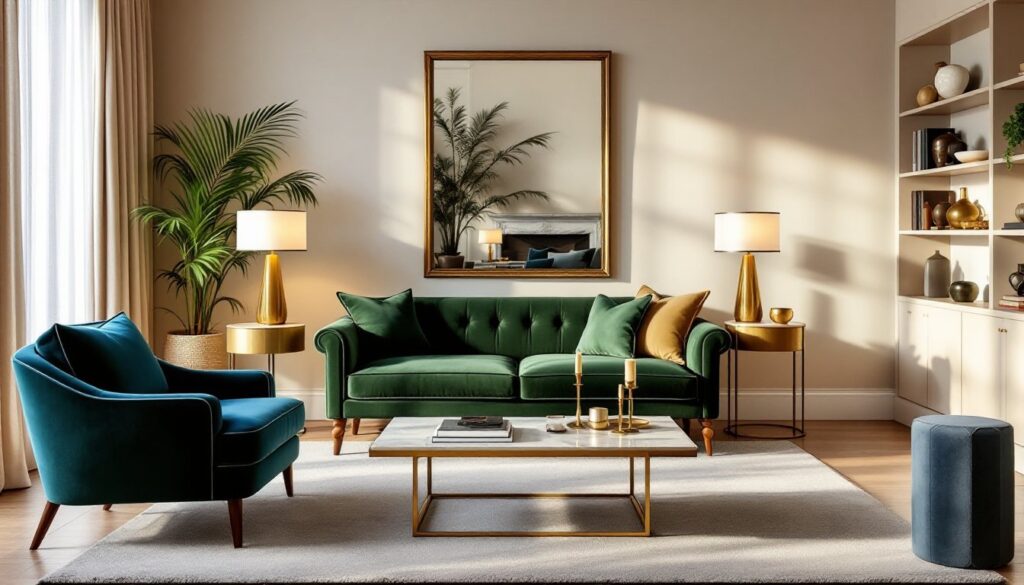
Building a cohesive room requires more than collecting individual pieces. Start by choosing your color palette: pick a neutral base (warm white, cream, or soft gray for walls) and two accent colors from the mid century spectrum. Mustard and teal, burnt orange and sage, or forest green and pale yellow all work beautifully.
Flooring matters more than many realize. Light wood (oak, ash, or maple) or polished concrete complements the style: if you’re covering existing floors, a low-pile wool rug in a geometric pattern anchors the seating area. Aim for a rug size that extends at least 12 inches beyond the outer edge of your sofa.
Wall treatment doesn’t have to mean paint. Shiplap, wood paneling, or even a single accent wall with a bold wallpaper (think geometric or botanical prints) can evoke the period without feeling dated. Resources like Elle Decor regularly showcase period-appropriate styling and color approaches that inspire thoughtful selections.
Lighting is crucial. Mid century design embraces statement lighting, a sculptural floor lamp with a tripod base, a sputnik-style pendant, or a minimalist table lamp with a tapered shade. Light sources should be functional, not hidden: visible bulbs and clean-lined fixtures are on-brand.
Incorporate storage that pulls its weight visually. A credenza (a long, low cabinet on legs) or wall-mounted shelving with a warm wood frame keeps the room organized while reinforcing the aesthetic. Avoid bulky entertainment centers: instead, mount your TV and tuck components into a sleek cabinet or behind a sliding wood panel.
Textiles add warmth and personality. A few throw pillows in coordinating colors, a wool throw blanket, and perhaps a woven wall hanging or macramé piece (mid century did embrace these) introduce texture without clutter. Stick to a limited palette so the room doesn’t feel scattered.
Plants bring life to a mid century modern room, especially tall, architectural varieties like fiddle leaf figs or snake plants. Mid century designers often treated plants as living sculptural elements, positioning them in simple ceramic or fiberglass planters that let the foliage be the star. Modern design platforms like Decoist feature inspiration galleries that showcase how plants integrate into thoughtfully styled mid century spaces.
Finally, curate accessories intentionally. A few carefully chosen art pieces, decorative objects, or books on a shelf feel more intentional than a crowded display. Think quality over quantity, one striking abstract painting beats a gallery wall if your space is small. Publications like Dwell often feature thoughtfully designed interiors that demonstrate this restraint and intention.
When sourcing pieces, balance new reproductions with vintage or secondhand finds. Estate sales, local antique shops, and online marketplaces dedicated to mid century pieces offer authentic options at varying price points. A room that mixes well-made reproductions with one or two genuine vintage pieces often feels more personal than all-new.
Conclusion
Mid century modern design endures because it solves a fundamental challenge: how to create a space that’s beautiful, functional, and livable all at once. By starting with a solid understanding of the style’s core principles, investing in key pieces with good bones, and layering in thoughtful details, you’ll build a living room that feels both polished and genuinely comfortable. The goal isn’t perfection, it’s intentionality.