Maintaining the perfect pool isn’t just about lounging in the sun with a drink in hand. It’s about achieving that magical balance, like a tightrope walker on a windy day. Dive into the world of pool water balance and discover how to keep your oasis sparkling clear and inviting.
Understanding Pool Water Balance
Achieving a balanced pool water chemistry is crucial for maintaining a clear and inviting swimming environment. Understanding water balance helps prolong the life of pool equipment and ensures swimmer comfort.
Importance of Water Balance
Water balance plays an essential role in the overall health of a pool. Properly balanced water reduces the risk of equipment corrosion and scale buildup. It keeps the water clear and safe for swimmers. An unbalanced pool can lead to skin and eye irritation. Regular testing helps detect imbalances quickly. A focus on water balance contributes to enjoyable swimming experiences.
Key Components of Water Balance
Understanding the key components is vital for effective water management. These components include pH, alkalinity, and calcium hardness. The pH level affects sanitizer efficiency, ideally ranging from 7.2 to 7.8. Alkalinity acts as a buffer for pH fluctuations. It should remain between 80 and 120 parts per million (ppm). Calcium hardness prevents corrosion and scaling, ideally maintained between 200 and 400 ppm. Monitoring these components ensures optimal water conditions for the pool and its users.
Essential Pool Water Balance Tips
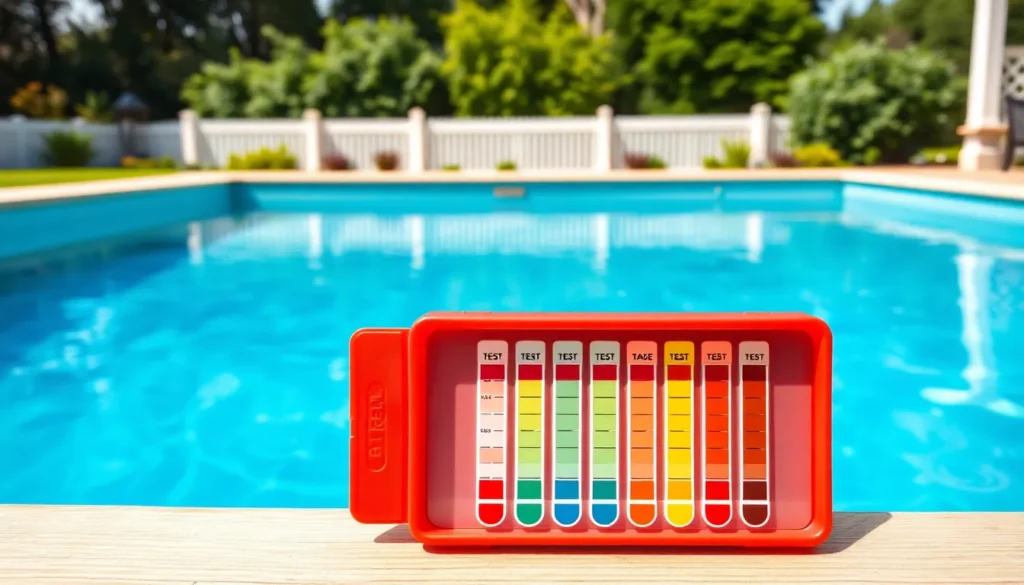
Achieving proper pool water balance requires attention to detail. Following specific guidelines promotes clear water and protects both equipment and swimmers.
Regular Testing of Water Chemistry
Testing pool water chemistry regularly ensures balanced conditions. Use a reliable test kit to check levels at least once a week. Early detection of imbalances leads to prompt adjustments, minimizing potential issues. Measurements of pH, alkalinity, and calcium hardness must align with established ranges. Consistent monitoring prevents the development of algae and bacteria, keeping the pool safe and inviting.
Optimal pH Levels
Maintaining pH levels between 7.2 and 7.8 is crucial for swimmer comfort. Water within this range feels more pleasant on skin and eyes. Additionally, balanced pH optimizes chlorine effectiveness for sanitation. When pH drifts outside this range, it can lead to irritation or equipment corrosion. Employ acidic or alkaline products to bring levels back to the ideal range as necessary.
Maintaining Alkalinity
Alkalinity acts as a buffer for pH, stabilizing fluctuations. Keeping total alkalinity between 80 and 120 ppm contributes to overall water balance. If alkalinity drops too low, pH levels become difficult to manage. Similarly, excessively high alkalinity can hinder pH adjustment. Regular checks and adjustments using sodium bicarbonate or muriatic acid aid in maintaining proper alkalinity.
Calcium Hardness Management
Calcium hardness should stay within 200 to 400 ppm for optimal results. Low calcium levels lead to corrosive water, damaging pool surfaces and equipment. Conversely, high levels result in scale buildup, causing filter inefficiencies. Test calcium hardness regularly and adjust using calcium chloride or a diluted acid solution to maintain balanced water. Proper management ensures long-lasting pool infrastructure and a pleasant swimming experience.
Common Pool Water Balance Problems
Pool owners frequently encounter various water balance problems that can impact the overall quality of the swimming experience. Awareness of these issues enables timely interventions to restore balance.
Algae Growth Issues
Algae growth presents a significant challenge for pool owners. High pH levels and inadequate chlorine can create favorable conditions for algae proliferation. Once algae develop, they can turn the water green and slippery, creating discomfort for swimmers. Regular testing ensures pH remains between 7.2 and 7.8, reducing the risk of algae blooms. Furthermore, maintaining adequate chlorine levels helps eradicate existing algae and prevent new growth.
Cloudy Water Causes
Cloudy water often results from several factors. Poor filtration, imbalanced pH levels, and inadequate sanitizer can cause cloudiness. Filtration systems should operate for at least 8 to 12 hours each day to maintain clear water. Adjusting pH levels to the ideal range supports optimal sanitizer effectiveness. Additional shock treatments can clarify cloudy water by eliminating contaminants that cloud the water.
Scaling and Corrosion Effects
Scaling and corrosion can severely damage pool surfaces and equipment. High calcium hardness levels lead to scale buildup, while low levels can cause corrosion. Scaling may manifest as white, chalky deposits on tiles and surfaces, detracting from the pool’s aesthetic. Corrosion affects metal components, leading to costly repairs. Maintaining calcium hardness between 200 and 400 ppm prevents these issues and prolongs the life of pool infrastructure. Regular monitoring is essential for identifying early signs of scaling or corrosion.
Achieving and maintaining proper pool water balance is essential for a safe and enjoyable swimming experience. Regular testing and adjustments not only enhance water clarity but also protect pool equipment from damage. By focusing on key components like pH, alkalinity, and calcium hardness, pool owners can prevent common issues such as algae growth and cloudy water.
Staying proactive with water chemistry ensures that swimmers remain comfortable while prolonging the life of the pool. With consistent monitoring and a commitment to proper maintenance, anyone can enjoy a sparkling clean and inviting pool all season long.